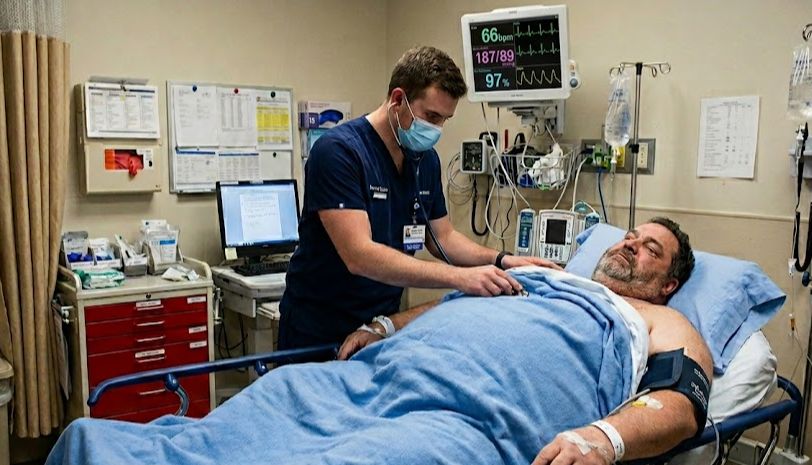
Stroke Malpractice CME
Defend yourself, be a better doctor, and earn up to 10 Stroke CME credit hours
Buy Now
Case Study
Learn from a real-life stroke malpractice case, from initial presentation to final lawsuit resolution.

Expert Review
In-depth case analysis from MedMalReviewer

Earn CME Credits
Get up to 10 Stroke CME credit hours
Take a deep dive into a stroke malpractice case filed against a board-certified EM physician
Buy Now
Who is the target audience?
This course is designed specifically for EM physicians. It will also be interesting to any physician who may encounter stroke patients in their practice, or who have an interest in medicolegal topics.
Like many of you, I am mandated to obtain stroke CME credit every year. I was tired of taking boring stroke CME courses that didn't hold my attention and weren't applicable to everyday practice, so I decided to create something better.
What is the course like?
The course covers a real-life stroke malpractice case in full detail.
It will be covered in a very similar style to The Expert Witness Newsletter written by me, MedMalReviewer, but in much greater depth.
We'll see the full medical records including nurse notes, physician notes, imaging reports, consult notes, and past medical records.
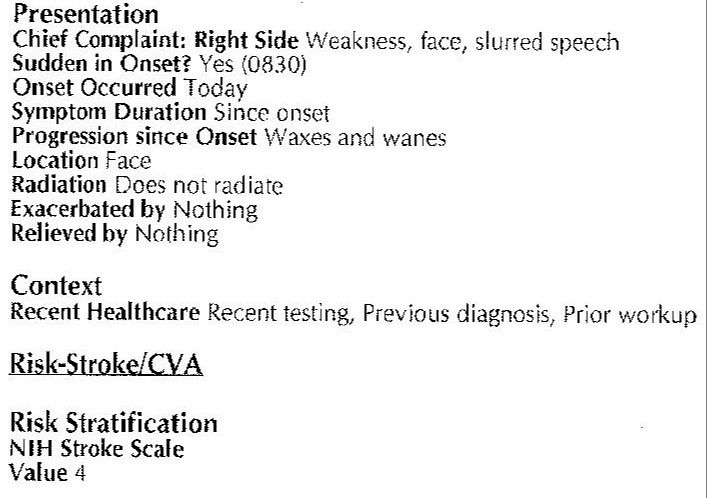
I've included the initial excerpt from the EM doctor's note below, see if you can find any clues as to why he was sued:
What additional information is included?
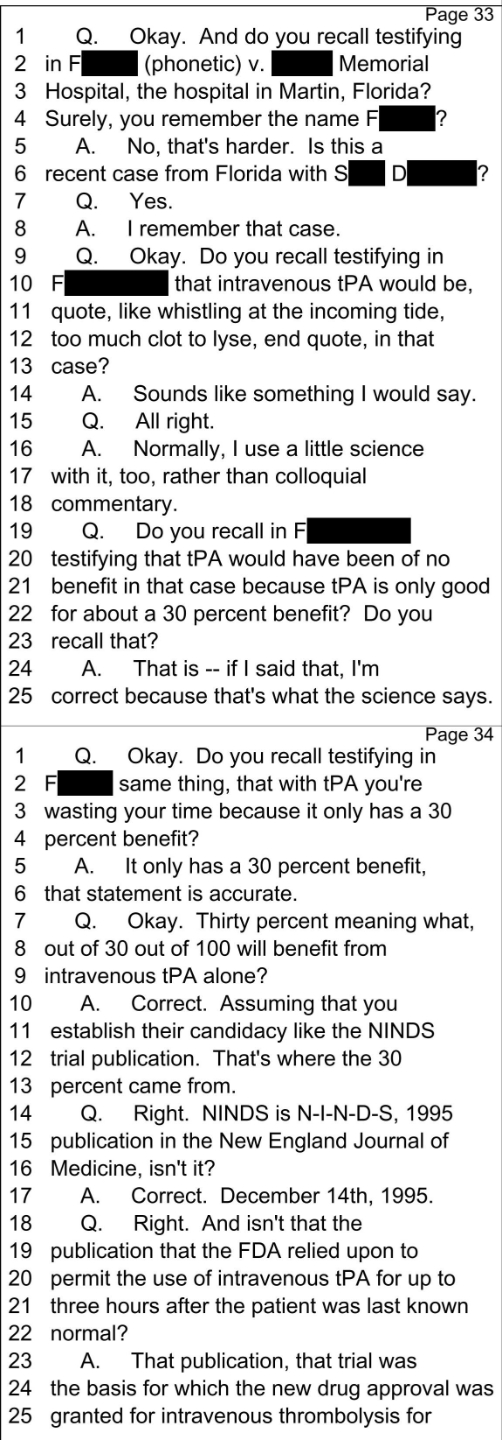
This case is special because it also contains the full depositions from the patient, his wife, the ER doctor, the ER nurse, and multiple expert witnesses.
You'll get to hear from those who were involved, in their own words, as they answered questions from the attorneys.
In my opinion, the depositions with the expert witnesses were the most interesting. It was like a journal club on steroids, with world class stroke experts going toe-to-toe with attorneys who came prepared to cite obscure papers and debate the nuances of tPA.
This is the most in-depth case I've ever published, and I think you'll love it.
How long will it take to finish?
I've purposefully made it flexible so that you can decide how fast you want to go through it. I know how ER doctors click through online modules... because I am one.
If you want to skim through and only focus on the interesting parts, it will only take an hour or two.
If you want to read the full details including every deposition, it will take up to a maximum of 10 hours. I wanted to make sure you could knock out a whole year's worth of stroke CME in one go.
Where can I review the CME learner disclosures?
Here is the link to the full learner disclosure information: https://stroke-malpractice-cme.scimpleeducation.com/
Let's jump in. Your shift just started, there's a stroke patient already waiting for you, and there's no telling what the nurses have been documenting...
Start Course Now